
 Image 1 of 3
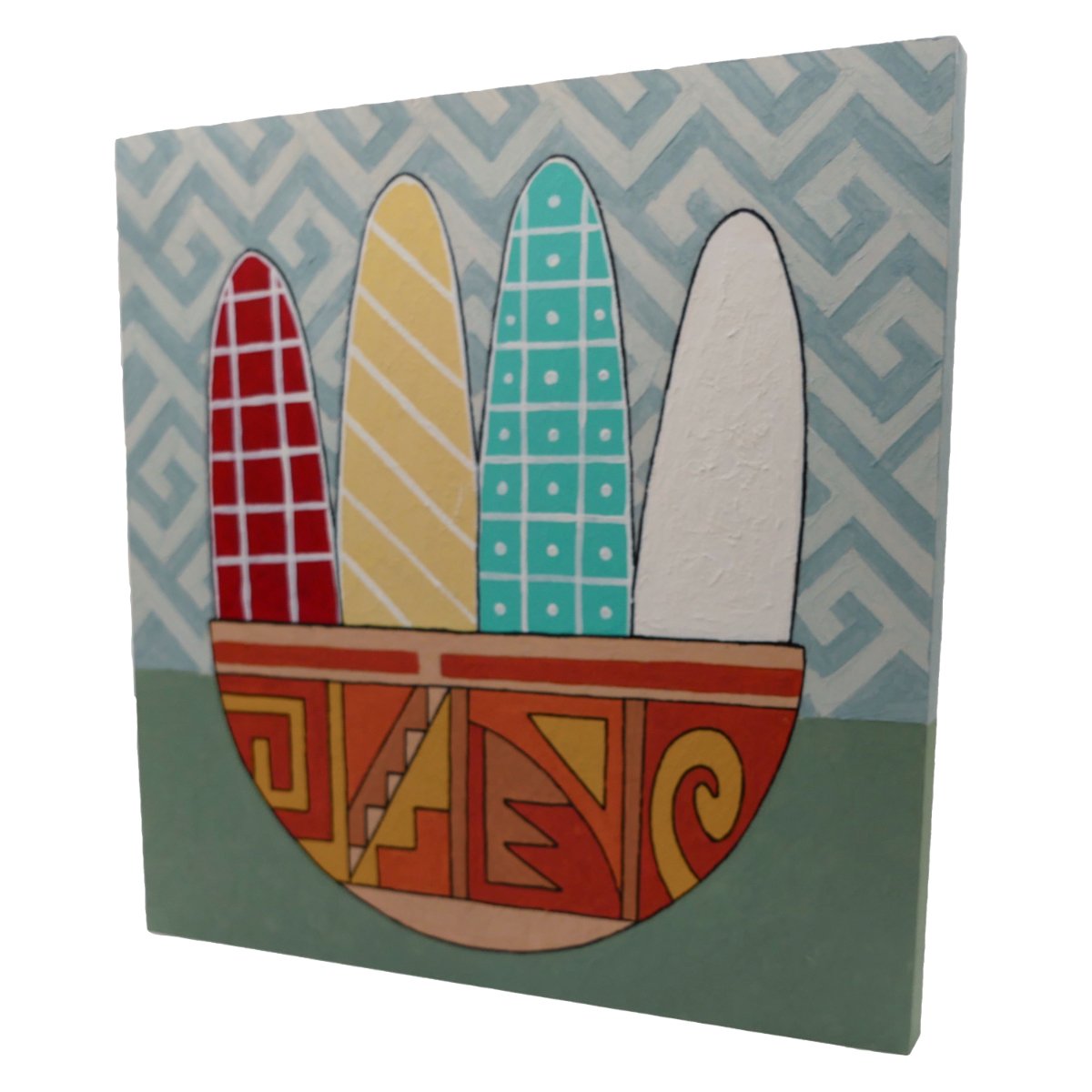 Image 2 of 3
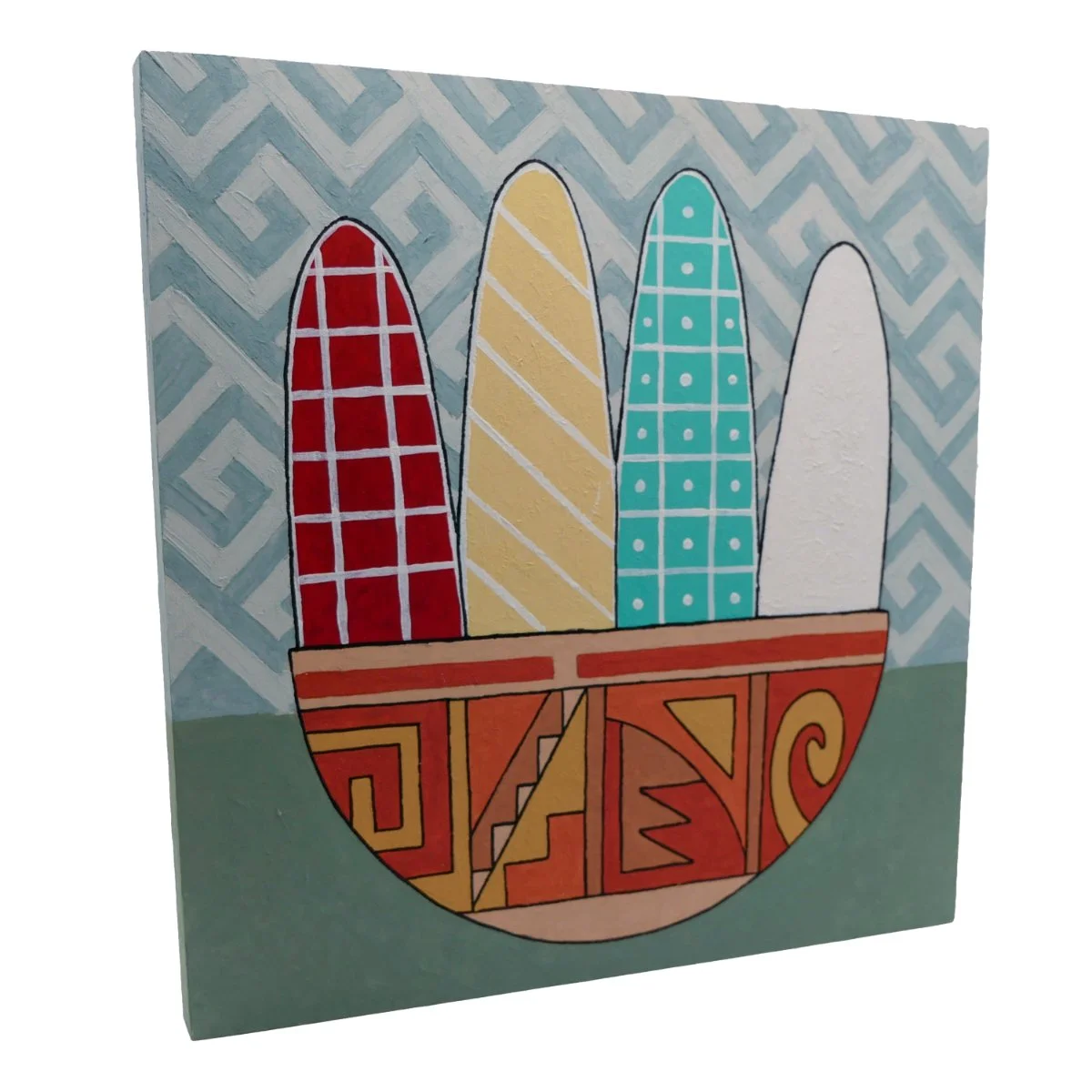 Image 3 of 3
Gerald Dawavendewa - Hopi & Cherokee
Acylic on wood panel / 10 by 10 by .75 inches
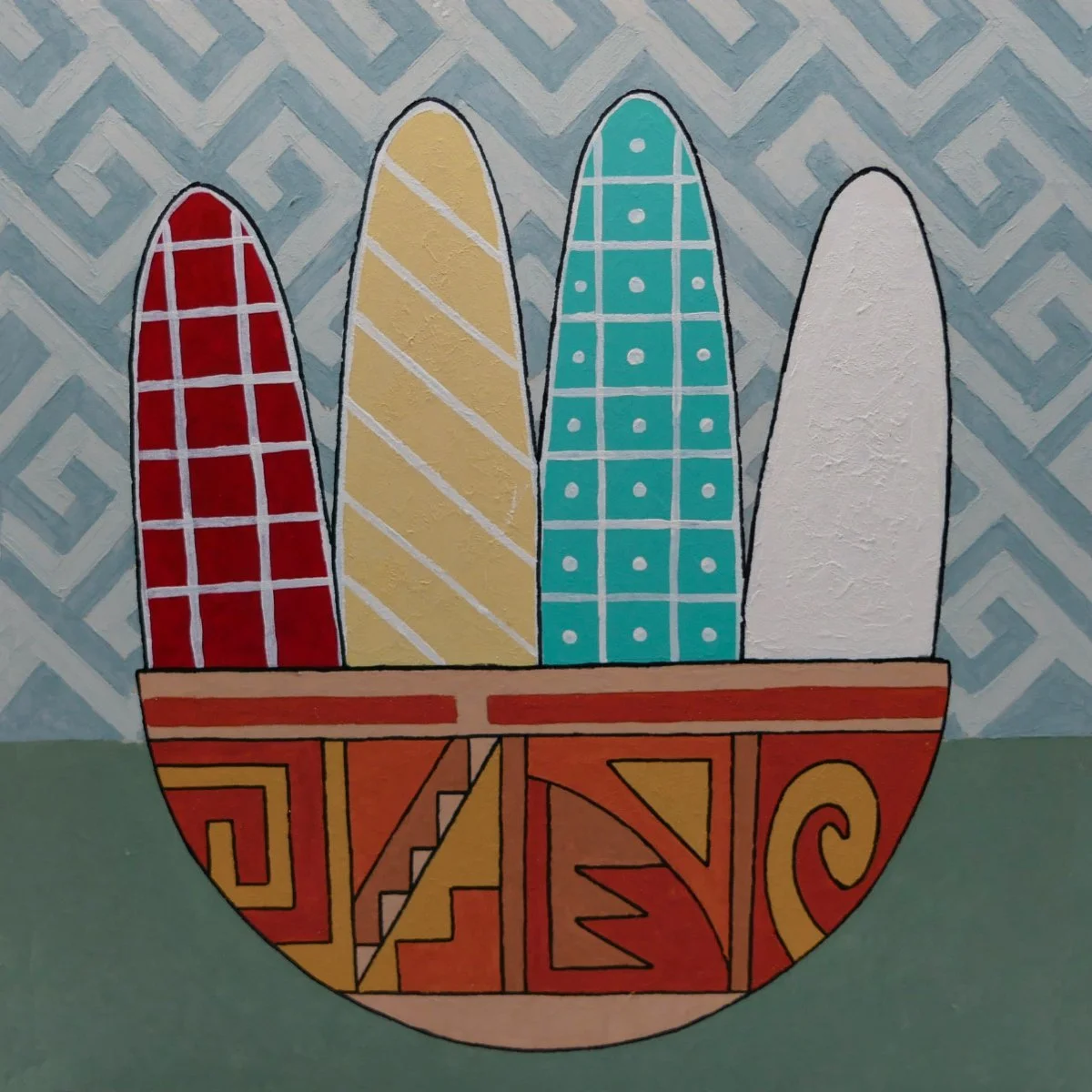
Four ears of corn symbolize the four directions the ancient Hopi clans traveled to. The ears of corn bless the journeys that the Hopi people took when they first came into this world.
Corn is one of the most important crops that the Hopi grew; it not only provided a food source, but it was also a part of ceremonies and rituals that defined the Hopi culture. The four corn ears sit in a bowl with germination, cloud, and prayer elements upon its surface. Behind the corn ears are rain clouds.
This artwork honors the ancient mural-painting style by using matte, textured pigment paints that echo the original murals found at ancient Pueblo sites. Pueblo painting is one of the oldest artistic traditions in the Southwest, dating back over 4000 years.