
 Image 1 of 3
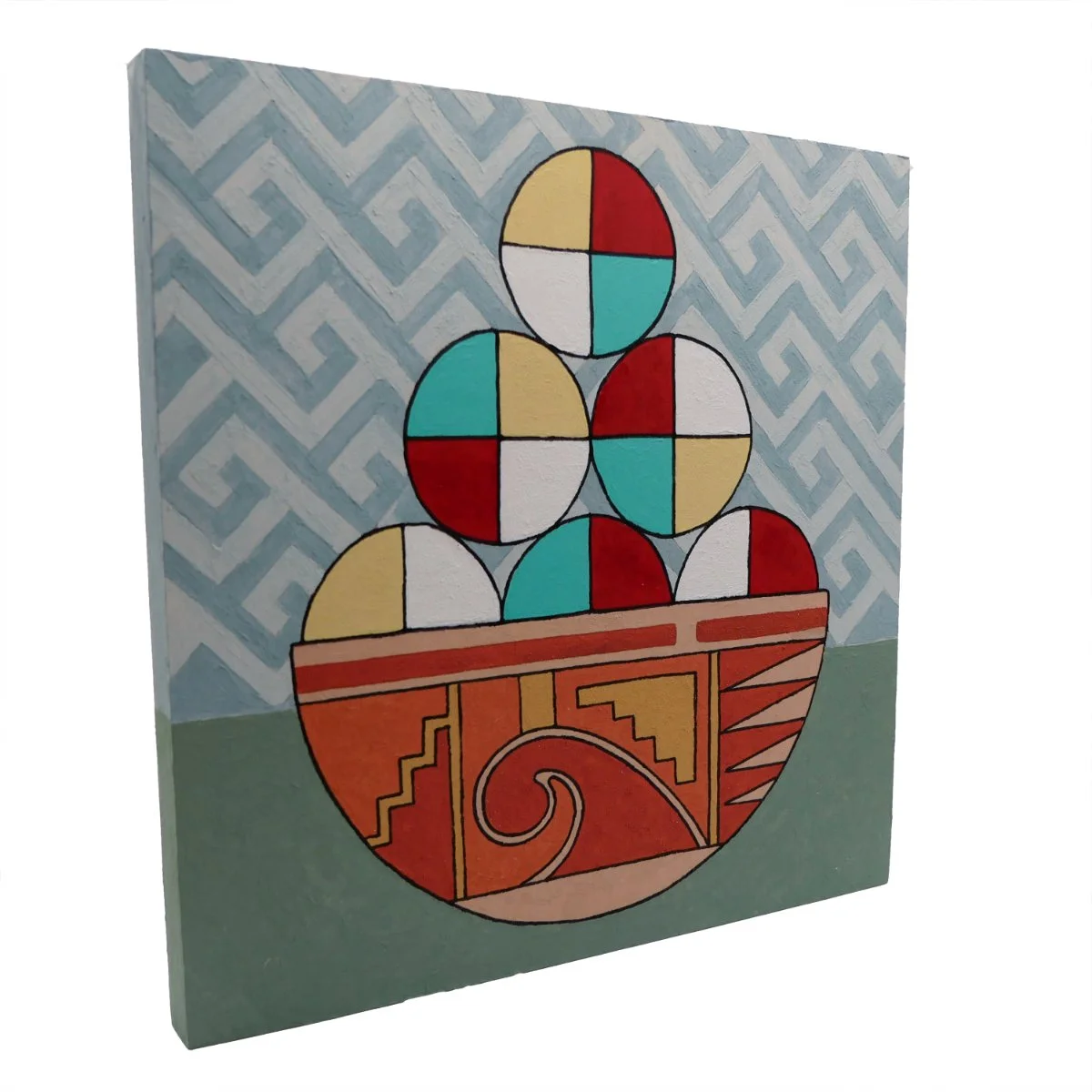 Image 2 of 3
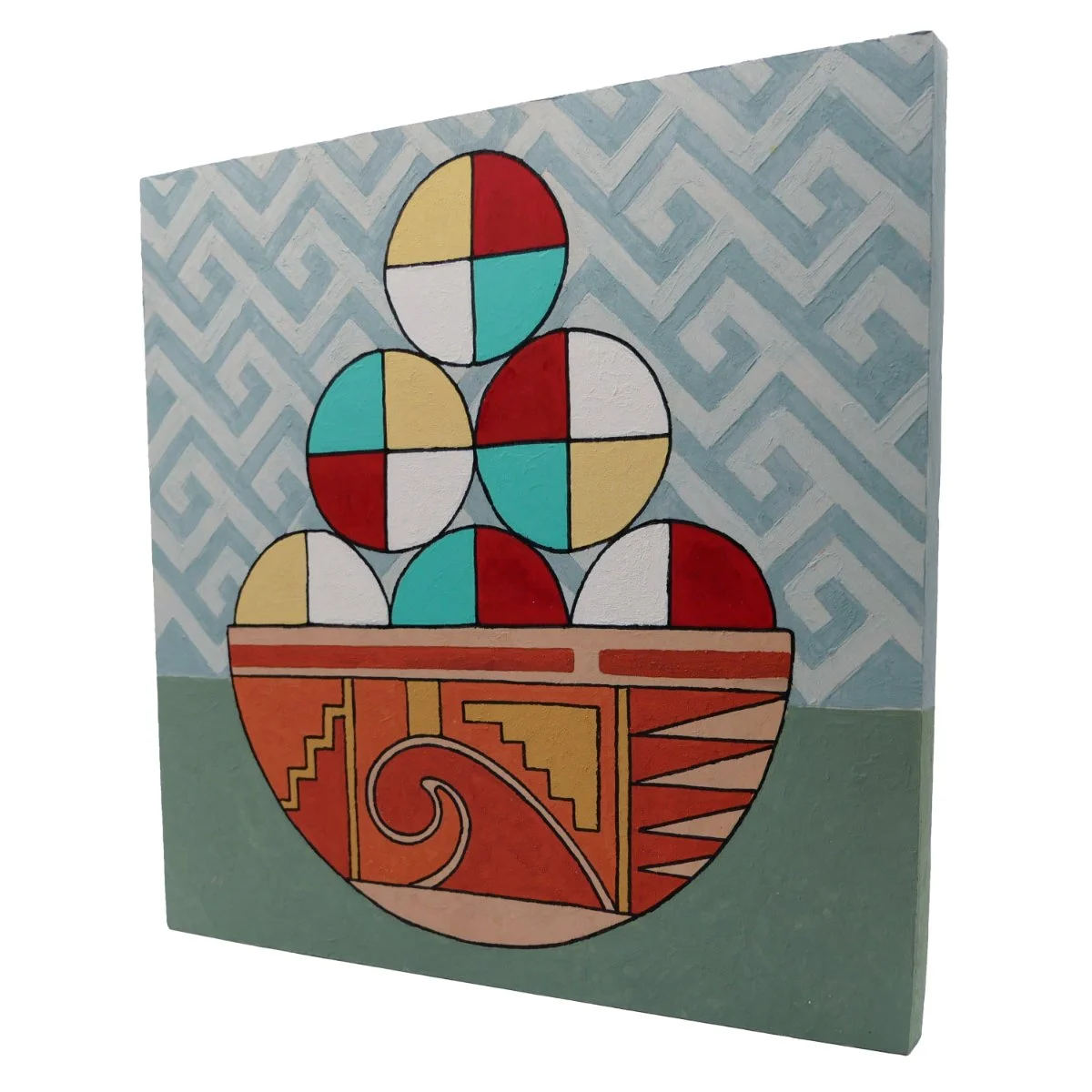 Image 3 of 3
Gerald Dawavendewa (Hopi & Cherokee)
Acrylic on wood panel / 10 by 10 by .75 inches deep
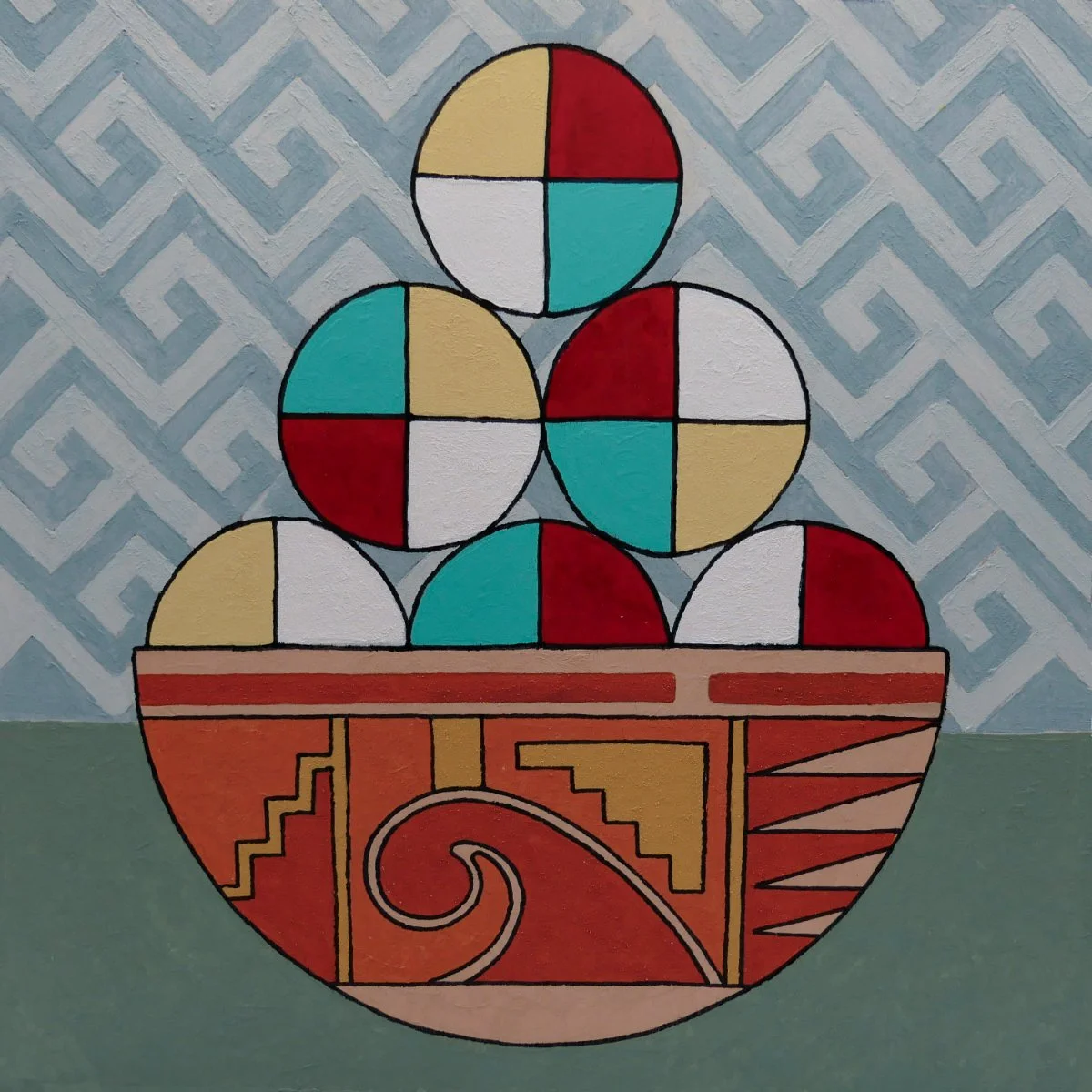
Ears of corn symbolizing four corn colors and the Hopi cardinal directions rest in a ceramic bowl with germination, cloud, and prayer elements. Clouds form in the background.
In Hopi culture, corn is considered essential. When the Hopi people first arrived in Tuuwaqatsi, the Fourth World, they chose a small blue corn ear to represent their life - one of long existence and challenges. A perfect ear of white corn symbolizes the Corn Mother during a ceremony to bring a child into this world. Corn and Hopi women both give life and sustain their people and culture.
This artwork honors the ancient mural-painting style by using matte, textured pigment paints that echo the original murals found at ancient Pueblo sites. Pueblo painting is one of the oldest artistic traditions in the Southwest, dating back over 4000 years.